When we talk about the titans of industry, our minds often jump to massive excavators, towering cranes, or even those incredible rocket launchers. Yet, there’s a whole class of vehicles out there, less celebrated perhaps, but absolutely crucial to particular trades – and one that I’ve always found fascinating is the slate truck. It’s not just a truck; it’s a specialized beast, a workhorse designed for a very specific, demanding purpose. You know, you don’t just casually transport tons of delicate, yet incredibly heavy, natural stone with any old vehicle. It takes something truly built for the job.
I mean, think about it: slate, a metamorphic rock, gets extracted from quarries, often in remote, challenging locations. Then, it needs to be moved. We're not talking about a handful of roofing tiles here; we're often dealing with immense slabs, huge pallets of finished product, or even raw, unprocessed rock right from the quarry face. This isn't a task for your average delivery van, is it? Not by a long shot. The specialized demands of handling slate – its weight, its inherent brittleness despite its strength, and the often-treacherous terrain of quarries and construction sites – call for a vehicle that’s been engineered with these exact challenges in mind.
The Anatomy of a Slate Hauler: More Than Just a Flatbed
So, what exactly sets a slate truck apart? Well, it’s a combination of robust design, specialized equipment, and sheer power. At its core, you’re usually looking at a heavy-duty chassis, built to withstand incredible stress. We’re talking about trucks with high gross vehicle weight ratings (GVWRs), often in the Class 8 category, equipped with engines that generate substantial torque to handle steep inclines and massive loads. These aren’t just about speed; they’re about reliable, sustained pulling power.
Often, I've seen these trucks configured as flatbeds, but not just any flatbed. They frequently feature reinforced decks, sometimes with integrated lashing points or custom-fabricated cradles to secure large slabs of slate. You wouldn't want hundreds of pounds of rock shifting around on a bumpy road, would you? That’s a recipe for disaster. Some might even have low-profile beds, designed to reduce the center of gravity and improve stability, especially when navigating winding quarry roads or urban construction sites. Stability, when you’re carrying that kind of weight, isn't just a nicety; it's a safety imperative.
Beyond the Flatbed: Other Specialized Forms
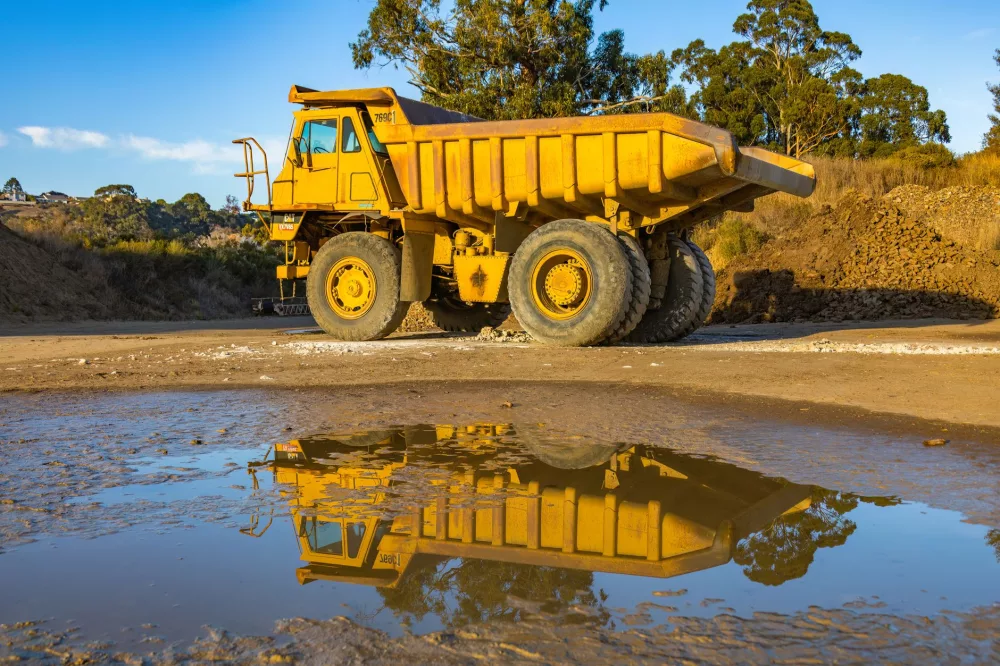
Of course, not all slate trucks look the same. In the initial stages of extraction, within the quarry itself, you’ll frequently find articulated dump trucks or rigid haulers. These are the absolute behemoths, designed to move vast quantities of raw slate from the excavation site to processing areas. Their colossal tires, powerful hydraulic systems, and robust bodies are built to shrug off the constant abuse of loose rock and uneven ground. I've stood near one of these beasts, and let me tell you, the ground practically vibrates when they pass by.
“Transporting slate is a dance between brute force and delicate precision. The truck must be mighty, yet its operators incredibly skilled in securing and maneuvering a material that, despite its hardness, can chip or crack if mishandled.”
Then there are the trucks equipped with cranes or hi-abs. These are particularly useful for loading and unloading large, unwieldy pieces of slate, whether at the quarry, a processing plant, or directly at a job site. Imagine trying to manually hoist a large slate countertop or a substantial roofing pallet; it’s just not practical or safe. These integrated lifting systems transform the truck into a self-sufficient unit, capable of managing its own cargo. It’s quite clever, really, how they consolidate functions.
The Operational Realities: More Than Just Driving
Operating a slate truck, regardless of its specific configuration, demands a unique skill set. It’s not just about getting a commercial driver’s license. There’s an intuitive understanding required for load distribution, tie-down techniques, and navigating diverse terrains with a heavy, sometimes top-heavy, load. We’re talking about precision driving on unpaved quarry roads, through narrow construction site entrances, and alongside busy public thoroughfares. It’s a lot to manage.
Think about the journey a piece of slate takes: it might start deep in a Welsh or Vermont quarry, be loaded by a massive excavator onto an articulated hauler, then transferred to a specialized flatbed for a cross-country trip, and finally lifted into place by a truck-mounted crane at a historic building restoration. Each leg of that journey relies on specific types of slate trucks and highly trained personnel. It’s a complex logistical chain, and every link is critical.
Safety First, Always
When you're dealing with tons of rock, safety becomes paramount. Accidents involving shifting loads or vehicle instability can be catastrophic. That's why rigorous training, meticulous vehicle maintenance, and strict adherence to loading and securing protocols are non-negotiable. I've always been impressed by the level of detail haulers go into, double-checking straps, ensuring weight is evenly distributed, and making sure their brakes are in tip-top shape. You really can’t cut corners when you’re hauling that kind of material.
The brakes, in particular, are often beefed up on these trucks. They need exceptional stopping power, especially when descending grades with a fully loaded trailer. Engine brakes and auxiliary braking systems aren't just luxuries; they're essential safety features that prevent runaway loads. It's a testament to engineering that these vehicles can manage such colossal weight so reliably.
The Economic and Environmental Footprint
The slate industry, while perhaps smaller than some other mining sectors, plays an important role in construction and heritage preservation. Slate trucks are the backbone of this industry's logistics, bridging the gap between raw material extraction and its final application. Without these specialized vehicles, the transportation costs and practicalities of moving slate would be prohibitive, potentially limiting its use.
On the environmental side, there’s an increasing focus on efficiency. Fuel consumption is a significant operational cost and an environmental consideration. Manufacturers are continuously working on more fuel-efficient engines and lighter, yet still robust, materials for truck construction. We’re seeing advancements in telematics, too, which helps optimize routes and monitor driver behavior for safer, more efficient journeys. It’s all about finding that balance between power, payload, and planetary responsibility. It’s a challenge, but I believe we're making progress.
So, the next time you see a building with a beautiful slate roof or a striking slate patio, take a moment to consider the unsung heroes that brought that material to its destination. The humble, yet incredibly mighty, slate truck and the skilled individuals who operate it are indispensable. They’re a crucial part of an industry that shapes our built environment, one heavy, carefully transported piece of slate at a time. It’s quite something when you really think about it.